News Alerts

$950 Million Punitive Damages Verdict Vacated from J&J Talc Trial

$950 Million Punitive Damages Verdict Vacated from J&J Talc Trial

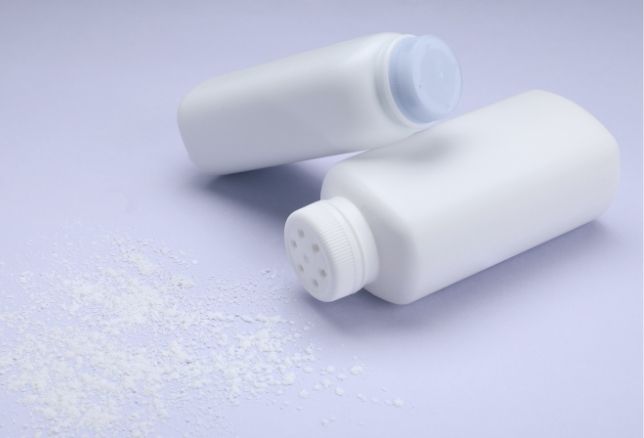
A California state court has vacated a $950 million punitive-damages award against Johnson & Johnson (“J&J”) in a talc-mesothelioma case, Moore et al. v. Johnson & Johnson et al.

On March 13, 2026, Los Angeles County Superior Court Judge Ruth Kwan granted J&J’s motion to set aside the punitive damages award to the family of Mae Moore, an 88-year-old California resident who died in 2021 from mesothelioma. The family alleged that Moore’s use of J&J’s talc-based baby powder exposed Moore to asbestos fibers that caused her cancer.

The jury had awarded $16 million in compensatory damages and $950 million in punitive damages, one of the largest punitive awards in a mesothelioma case. Judge Kwan found that plaintiffs failed to prove that J&J acted with malice or concealed known risks. The court concluded that the record did not establish that J&J “knew its products contained asbestos” or engaged in conduct warranting punitive damages.

  1. JNOV as to Punitive Damages – Malice

In viewing the evidence in the light most favorable to the plaintiff, Judge Kwan found that there was no clear and convincing evidence of malice. To prove J&J acted with malice plaintiff was required first to establish that J&J knew its products contained asbestos. In rejecting this finding, the court found that the undisputed evidence established that:

  • “hundreds of test results showed no asbestos in Johnson’s Baby Powder”;
  • “at all relevant times J&J was using [ ] TEM, the best available testing method to detect asbestos in talc”; and
  • The limited studies claiming to find asbestos in Johnson’s Baby Powder “were retracted, could not be duplicated, or were otherwise debunked or questionable.”

The court further determined that even if plaintiff had proven that J&J knew of asbestos in its product, there was not clear and convincing evidence that “J&J knew that there was enough asbestos in its products to cause a high probability of injury.” In reaching this conclusion, the court found that the evidence established that:

  • The amount of asbestos alleged to be in J&J’s product did not exceed the level believed to be safe by OSHA and the FDA.; and

Relevant epidemiology in the form of cohort studies of talc miners and millers found no relationship between talc exposure and cancer.

  1. JNOV as to Fraudulent Concealment

Critical to the court’s analysis of the concealment claim was the lower standard of proof required for the plaintiff to prove this claim. As to this claim, and based on this lower burden of proof, the court held that there was sufficient evidence for the jury to find knowledge. Specifically, the court reasoned that based on 1991 Blount testing, wherein asbestos was reported as being found in J&J’s product, a jury could have inferred that J&J knew of asbestos in its products. The court also reasoned that in light of J&J’s zero tolerance policy, the jury could have concluded that J&J knew that even a small amount of asbestos would be harmful.

However, regarding the final element of plaintiff’s concealment claim the court determined that the plaintiff had not met her burden of proof. Specifically, the court found that J&J did not make materially misrepresented statements about its Johnson’s Baby Powder that would trigger a duty to disclose.

  1. JNVO Denied as to Causation

The court found that the jury did not clearly err on the issue of causation. The Court noted that plaintiff’s experts testified that: 1) J&J’s products contained asbestos; 2) plaintiff was “exposed” to J&J’s products containing asbestos; and 3) such “exposure” was to a reasonable probability a substantial factor in contributing to her mesothelioma by increasing her risk of developing asbestos-related cancer.”

While the court acknowledged the substantial evidence presented by J&J challenging the faulty testing and results of plaintiff’s experts, it determined that defendant’s evidence was not so clearly more credible than plaintiff’s to warrant JNOV. While discussed earlier in Judge Kwan’s decision, her analysis of the causation evidence did not include a discussion on the undisputed lack of epidemiological evidence showing any causal link between talc and mesothelioma.

You can read more about the decision, here.

Potential Litigation Impacts: Gov. Hochul’s Auto Insurance Reform Proposals

As part of her 2026 Executive Budget, Governor Hochul proposed broad legislative reforms targeting fraud and consumer costs related to auto insurance and motor vehicle accident litigation. Over the last weeks, the Governor rallied in support of these reforms with leaders and advocates, attempting to coalesce support. Governor Hochul’s proposed reforms include amendments to the civil practice law, aimed at reducing frivolous litigation and excessive verdicts and verdict allocations to pass resulting cost reduction to New York’s auto insurance customers.

While Governor Hochul is rallying for support for the amendments, the Senate and Assembly recently submitted revised versions of the proposed legislation omitting the Governor’s provisions entirely. The Governor is nonetheless pursuing these amendments as a significant part of her agenda and they may be re-introduced for legislation in the near term. The Citizens Budget Commission (CBC), a nonpartisan fiscal think tank, also recently submitted testimony in support of the Governor’s reforms suggesting potential for growing momentum behind them.

Should these amendments take effect, it would significantly impact litigation strategy and pretrial practice. As such, we have provided a more in-depth discussion on the key amendments as well as potential practical effects for practitioners.

Tightening the “Serious Injury” Threshold

The existing no-fault framework in New York permits plaintiffs with a “serious injury” to sue for pain and suffering. However, as currently defined, “serious injury” has often been interpreted as permitting plaintiffs with minor and non-permanent injuries to pursue damages beyond the no-fault limit. Governor Hochul’s proposed amendments are aimed at redefining “serious injury” using stricter, objective medical standards. For instance, the Governor proposed to eliminate the “90/180” category of serious injury entirely, intending to reduce the number of spurious or marginal personal injury claims clogging state court dockets. The 90/180 category allows accident victims to sue for pain and suffering when a non-permanent injury prevents them from performing “substantially all” daily activities for at least 90 of the 180 days following an accident.

It is not clear to what extent this amendment would immediately reduce the number of cases filed involving marginal injuries as plaintiffs often file complaints alleging 80/180 injuries in combination with more severe injuries. These types of complaints would be unaffected by the elimination of the 90/180 category.

Investigating the true extent of an injury early in litigation will be even more critical should the amendment pass. Additional amendments tightening the evidentiary standards for establishing objective medical proof of such claims may be needed for the litigation system to experience the full benefit of the Governor’s “serious injury” amendment.

Barring Any Recovery Where Plaintiff is Mostly at Fault

New York is with a minority of jurisdictions that allow a plaintiff to recover in litigation even where the plaintiff is primarily at fault for causing their injury. To address this, the Governor proposed to modify CPLR § 1411 to implement a modified comparative fault standard, precluding MVA claimants from recovering any damages if their culpable conduct is greater than that of the defendants.

This is one of the most significant and potentially impactful amendments proposed by the Governor and would bring New York in line with a majority of states. However, this amendment is expected to face the most opposition from the plaintiffs’ bar and affiliated lobbyists.

Should this amendment pass, it would significantly change the calculus for settlement and trial. In cases where the plaintiff has a substantially provable share of the liability, plaintiff’s counsel may be more willing to come to the table for reasonable settlement negotiations knowing the risk of essentially a defense verdict if a jury were to assign their client 51% of the fault.

Elimination of Joint and Several Liability Exception for MVAs

Gov. Hochul’s proposed amendments also included the wholesale repeal of CPLR § 1602(6), which exempts MVA cases from joint and several liability. Eliminating this exemption would ensure that defendants in an MVA case are only liable for damages in proportion to their fault so long as they are less than 50% at fault.

Eliminating joint and several liability in auto cases would have the effect of significantly redistributing risk between co-tortfeasors, with profound implications for litigation strategy and settlement allotment. It could result in plaintiffs’ attorneys being more willing to engage in reasonable settlement discussions with low fault defendants knowing that the defendant will only ever be liable for their proportionate share of liability. Moreover, in cases with multiple tortfeasors plaintiffs will face defendants providing proofs against other entities whether named in the litigation or non-parties. However, this amendment will also implicate indemnification issues. Generally, this amendment will create a barrier to plaintiffs’ customary attempts at pursuing recovery from deep pocket entities in lieu of minimally insured or insolvent entities/individuals who have higher shares of fault for the accident.

Sequencing Liability and Threshold Determinations

Gov. Hochul’s proposal would also effectively structure the order in which liability and threshold determinations are made, amending Insurance Law § 5104(a) to require that:

No liability for non-economic loss shall be fixed unless and until the trier of fact has determined the existence of a serious injury […] the trier of fact shall not determine the question of whether an injury is a serious injury until the trier of fact has determined the party or parties at fault.

This proposal is likely intended to streamline jury trials (thereby reducing litigation costs, with hopeful downstream cost savings for purchasers of insurance) by requiring first that the factfinder identify who is “at fault” for the accident before deciding whether plaintiff’s injuries meet the serious injury threshold. In considering this amendment in relation to the comparative fault amendment, in a case where a plaintiff is found more than 50% by the jury, deliberations would end and the jury would presumably not get to the questions of serious injury or damages.

Key Takeaway:

The Legislature has signaled that it does not accept these proposed amendments in their initial form. However, Gov. Hochul has signaled that these amendments are a priority and has suggested in interviews that she expects the amendments to be reintroduced. In the event the amendments or a negotiated version are signed into law, LCBF is prepared to advise clients on how claims investigation and management, litigation defense strategy, trial strategy, and coverage positions are impacted.

New Jersey Senate passes legislation amending NJLAD to include height and weight as protected characteristics

A number of states have enacted laws that protect against discrimination based on personal appearance and some have specifically named weight as a statutorily protected category. New Jersey may soon follow suit. S-1631 proposes to amend New Jersey’s Law Against Discrimination to add height and weight as protected characteristics. The Senate passed the bill and the bill has since been referred to the Assembly Judiciary Committee for review.

Recent studies suggest that hiring and raise decisions, career mobility and workplace culture can be shaped by bias against overweight people. Historically, overweight people have had limited protections against workplace bias due to the immutability doctrine, which protects against discrimination based on characteristics that cannot be changed such as race, but typically does not extend to characteristics that can be changed such as weight. Furthermore, some legal scholars have opined that bias against overweight people is rooted in moral blame and a belief that being overweight is a lifestyle choice.

New York City passed a law addressing discrimination based on weight in 2023. Local Law 61 of 2023, known as New York City Human Rights Law (NYCHRL), prohibits discrimination based on an individual’s actual or perceived height and weight in employment, housing, and public accommodations.

We have already seen litigation under NYCHRL take shape in New York. In one of the first cases interpreting NYCHRL, Harris v. the City of New York, the plaintiff alleged she was denied employment as a probation officer solely because of her weight. The claim survived a motion to dismiss. In the Court’s opinion denying the motion, the Court noted that while exceptions exist permitting weight consideration for employment under NYCHRL, the City failed to identify any law or regulation that required or justified a weight requirement. The Court also was unpersuaded that the disqualification of plaintiff based on her weight constituted a medical disqualification, as it did not include any reference to medical conditions or diagnoses preventing plaintiff from completing job requirements of the position.

Proponents of the New Jersey bill assert that it will support New Jersey employees being evaluated based on merit rather than their size. However, some legal scholars are more skeptical of the impact of these protections. Some argue that while overweight people face barriers in the workplace, expanding the categories of protected classes too far may have the inverse effect of weakening protections and may invite backlash from employers who feel that they are being stripped of discretion in employment decisions.

Should the New Jersey bill be signed into law, it will be essential for employers who maintain legitimate physical fitness requirements for employment establish clear protocols and procedures outlining how those requirements serve a legitimate demand of the position. More generally, employers may need to consider retraining and guidance on discrimination procedures.

You can read a complete article about the New Jersey legislation from Law.com here.

NYC Council Restores Gender-Motivated Violence Claims After Adams Veto

The New York City Counsel has enacted a significant correction to the City’s Gender-Motivated Violence Act (GMVA), overriding former Mayor Eric Adam’s New Year’s Eve veto and reinstating claims that had been dismissed following a 2025 appellate ruling. The Legislation – Intro. 1297A – clarifies that survivors may pursue claims not only against abusers but also against institutions and agencies alleged to have enabled gender-motivated violence.

The measure responds directly to the First Department’s June 2025 decision holding that the 2022 GMVA amendments permitting suits against institutional enablers did not apply retroactively. That ruling led courts to dismiss hundreds of cases, including actions involving alleged abuse at Rockefeller University Hospital and New York City juvenile detention facilities. As attorney Jordan Merson noted, survivors were told “you came forward for nothing” after believing the 2022 amendments allowed their claims.

Under Intro. 1297a, survivors now have an 18-month window to bring claims for misconduct occurring before January 9, 2022. The law also permits plaintiffs who filed GMVA claims between March 1, 2023 and March 1, 2025 to amend or refile to add revived causes of action. According to the City Council, the legislation ensures that “victims of gender-motivated violence, whenever it occurred, can come forward and pursue their claims in court.”

This override followed sustained advocacy from survivors, plaintiff’s attorneys, and organizations including the New York State Trial Lawyers Association.

To read the complete article from Law.com about the legislation, click here.

Waive of hotel trafficking lawsuits expands to other property owners in new California lawsuit against luxury apartment complex

The Trafficking Victims Protection Act was passed by congress in 2000 establishing criminal liability for forced labor and sex trafficking. Subsequently Congress passed the Trafficking Victims Protection Reauthorization Act (TVPRA), which created an independent civil right of action for victims of trafficking crimes against their traffickers. The TVPRA was then expanded in 2008 to create a civil right of action against those who facilitate trafficking ventures in addition to the traffickers themselves. This provision was largely unused for the next 15 years resulting in less than 300 claims, mostly related to forced labor. [i]

Since then, we have seen a waive of sex trafficking litigation almost exclusively targeting the hotel franchise industry. These hotel claims have survived dismissal under the theory that the hotels in question are alleged to have knowingly benefitted from a sex trafficking venture. A.D. v. Wyndham Hotels & Resorts, Inc., 2020 U.S. Dist. LEXIS 250759 (E.D. Va. July 22, 2020). These hotel trafficking claims have taken aim at franchisors and franchisees alike.

However, in a recent relatively novel California TVPRA case, A.V. v. Avalonbay Communities Inc. D/B/A Avalon at Mission Bay, the plaintiff A.V. brings a claim against the apartment complexes that rented to her trafficker, not hotels or motels. A.V.’s complaint alleges that the apartment complexes were “instrumental, if not necessary, participants in a sex-trafficking venture.” A motion to dismiss A.V.’s complaint was recently filed by defendant South Beach Marina Apartments and is returnable in April.

For a plaintiff’s claim to survive under the TVPRA the plaintiff must establish that the defendant (1) knowingly benefitted (2) “from participation in a trafficking venture” (3) that it “knew or should have known it engaged in.” 18 U.S.C. § 1595(a).

Significantly, in the hotel context there are typically allegations of frequency and repeated interface with the hotel employees including through check-ins at the front desk and room cleanings, which are unique to hotel business models. In the A.V. matter, the claims of participation in the venture include allegations that apartment security and doormen were paid to keep the trafficking venture hidden and that maintenance staff witnessed commercial sex acts or exchange of payments with perpetrators.

As this litigation continues to expand and the case law evolves, premises owners should take action to minimize exposure, including through training and reporting procedures.

[i] Alexa Goldstein, Come, Stay, and Enjoy Your Day: Sex Trafficking and Franchisor Liability Under Section 1595 of the Trafficking Victims Protection Reauthorization Act, Florida Law Review, Vol. 4 Iss. 2

Federal Judge Certifies Class for PFAS Litigation Against Pet Food Company

A federal judge certified a class of California consumers alleging that the J.M. Smucker Co. failed to disclose risks of forever chemicals in certain pet food packaging used on the company’s products. The underlying complaint alleges that Smucker and Post Consumer Brands LLC, failed to disclose that the pet food may contain titanium dioxide, and that the packaging contained the PFAS chemicals, harming the health of the animals who would consume the product. The plaintiff’s claims with respect to the PFAS chemicals is based on a theory PFAS migration, the scientific basis for which is heavily disputed.

The certified class includes California consumers who purchased any of Smucker’s 9Lives, Kibbles ‘n Bits and Meow Mix products between Nov. 4, 2018, and Dec. 31, 2022. Pursuant to the judge’s decision, it was noted that Smuckers sold millions of the disputed products, in California, satisfying the numerosity requirement for class certification.

You can read the complete Law360 article reporting on the verdict, here.

Federal Judiciary Advisors Hold Hearing on Proposed New Rule of Evidence 707 Governing AI-Generated Evidence

On January 29, 2026, the Committee on Rules of Practice and Procedure—the advisory body to the Judicial Conference of the United States—held a hearing on the creation of a new provision pertaining to machine learning and artificial intelligence (“AI”): Federal Rule of Evidence 707.  This proposal comes at the heels of three years of research and investigation by the Committee to address the fast-developing field of AI and concerns about the unreliability of evidence created by machine learning.

In proposing Rule 707, the Advisory Committee on Rules of Evidence—a subset of the larger Committee—alluded to such examples as AI analysis of stock trading patterns to establish causation, analysis of digital data to determine whether two works in copyright litigation are substantially similar, and AI assessment of the complexity of software programs to determine whether code had been misappropriated.

The proposal was first put forward on May 2, 2025, by the Advisory Committee on Evidence Rules.  The Advisory Committee explained that, while at first it considered amending Rule 702, which sets forth the Daubert standard for expert witnesses, the committee ultimately decided that an entirely new rule of evidence dealing solely with machine evidence would be more appropriate.  After publication of the proposed Rule on June 10, 2025, the Committee on Rules of Practice and Procedure released Rule 707 for public comment from August 15, 2025, until February 16, 2026.

Rule 707 specifically addresses those situations in which a party offering a certain piece of evidence admits it is AI-generated but offers no expert to attest to the authenticity of the evidence.  The evidence would be scrutinized with respect to the Daubert factors: helpfulness to the trier of fact, basis in sufficient facts or data, reliability of methods, and reliable application.  Without an attesting witness available to be cross-examined, however, the Advisory Committee worries that the evidence might be unreliable, and yet the unreliability would be difficult to detect, as inaccuracies of AI-generated data are often buried in code.

The Rule contains an exception that applies to the output of “simple scientific instruments” such as a mercury-based thermometer, electronic scale, or battery-operated digital thermometer to avoid litigation over instruments that can safely be presumed reliable.

On January 29, 2026, commenters ranging from Winston & Strawn, King & Spalding, and U.C. Berkeley School of Law to the American Civil Liberties Union offered comments on the proposal.  They voice various concerns such as what may be considered a “simple scientific instrument,” practical concerns about the lack of procedural precedents, burdens on parties in meeting the requirements of the new rule, and potential abuses of the rule.

Critics caution that Rule 707 does not apply to evidence whose authenticity is in dispute and does little to help courts avoid deepfakes or other falsified evidence.  Others worry that litigants and their lawyers will be subject to substantial additional pretrial proceedings and expense.

Nevertheless, this new rule demonstrates the federal judiciary’s recognition of and response to the unavoidable reality of AI-generated evidence in litigation.

Governor Philip Murphy restores jury service rights to NJ individuals with criminal convictions

On January 11, 2026, Governor Murphy entered Executive Order 411, which provided clemency for the purpose of jury service to individuals convicted of crimes in New Jersey. The clemency Order applies only to individuals convicted of crimes in New Jersey and to those individuals who served their sentences including probation and parole. The clemency Order does not apply to individuals convicted of impeachment or treason. The Order also does not preclude the examination of potential jurors related to criminal convictions during voir dire and permits for-cause challenges to prospective jurors related to the individuals’ criminal records.

To read the full text of the Executive Order, click here.

Federal PFAS Accountability Act Reintroduced, Creating New Cause of Action and Medical-Monitoring Remedy

Senator Kirsten Gillibrand (D‑NY) and Congresswoman Madeleine Dean (D‑PA‑04) have reintroduced the PFAS Accountability Act, a federal bill that would create a new cause of action for individuals significantly exposed to PFAS (“forever chemicals”) and authorize courts to award medical monitoring. The legislation, marks the latest effort to establish nationwide PFAS liability standards after similar proposals failed in prior congressional sessions.

The bill would amend the Toxic Substances Control Act (TSCA) to allow individuals who have been “significantly exposed” to PFAS—or who have reasonable grounds to suspect such exposure—to bring suit individually or as a class in federal district court. Claims could be asserted against any entity involved in manufacturing the PFAS at issue that foresaw, or reasonably should have foreseen, resulting human exposure.

The legislation creates rebuttable presumptions of significant exposure, including where PFAS was released into areas where an individual would have been exposed for at least one cumulative year, or where testing shows PFAS present in the individual’s body. Defendants may rebut the presumption with independent testing.

Courts would be authorized to award medical monitoring upon a showing that exposure increased the risk of disease and that additional medical examinations would be effective in detecting PFAS‑related conditions. Where scientific data is insufficient, courts may temporarily lower the standard of proof and may order studies to determine whether exposure increased disease risk.

The bill defines PFAS broadly—any substance with at least one fully fluorinated carbon atom—potentially expanding the scope of covered chemicals beyond existing EPA regulatory definitions.

If enacted, the PFAS Accountability Act would materially expand litigation exposure for PFAS manufacturers and related entities by creating a new federal cause of action, easing plaintiffs’ evidentiary burdens, and authorizing medical‑monitoring awards even in the absence of present physical injury. Companies involved in PFAS production, use, or historical disposal should monitor the bill closely as it moves through Congress.

To read the full text of the PFAS Accountability Act, click here.

New York’s Grieving Families Act Vetoed Again as Debate Intensified

Governor Kathy Hochul has issued her third veto of the Grieving Families Act (S.4423), a bill that would significantly expand damages available in New York wrongful death actions. The legislation—passed repeatedly with bipartisan support—would allow recovery for grief, anguish, loss of companionship, and other non economic harms, and would broaden the category of eligible beneficiaries to include domestic partners and individuals standing in loco parentis.

Supporters argue that New York’s current 187-year-old statute, which limits recovery to pecuniary losses, disproportionately undervalues the lives of children, seniors, low wage earners, and non working family members.

Healthcare systems, insurers, and hospital associations continue to oppose the bill, warning that expanded damages could increase malpractice premiums and strain already fragile hospital budgets. The governor has cited these economic concerns in each veto.

With the 2026 legislative session approaching, lawmakers and advocacy groups are preparing to reintroduce the measure. Clients with exposure to wrongful death claims—particularly healthcare providers, insurers, and self insured entities—should monitor developments closely, as any future enactment would materially expand potential liability in New York.

You can review a complete article from Law.com on this legislation, here.

You can review the complete Grieving Families Act (S.4423), here.

Uber Files Series of RICO Suits Against Personal Injury Lawyers Across the U.S.

The ride-hailing company Uber Technologies in recent months has filed a series of suits under the federal Racketeer Influenced and Corrupt Organizations Act (“RICO”) against a dozen personal injury lawyers and firms in New York, Florida, California, and Pennsylvania. Uber alleges they schemed with medical providers and others to transform low-value auto accident claims involving Uber drivers into million-dollar-plus lawsuits, to take advantage of the company’s hefty insurance policies.
Defendants in these lawsuits include Wingate, Russotti, Shapiro, Moses & Halperin in Manhattan, recently sued in the Southern District of New York in September, as well as Simon & Simon in Philadelphia.

Uber’s lawsuits all stem from the common circumstance that rideshare companies are required to carry higher insurance limits than ordinary drivers. Uber’s liability coverage is $1 million in California, Florida and Pennsylvania, according to the company. In New York State, it’s $1.25 million. Uber says approximately 45% of the fare of every Uber ride in Los Angeles, for example, goes to mandated insurance costs. Uber says scammers are well aware of this coverage, which allegedly makes the company a target for fake personal injury claims, inflated medical billing and even staged accidents.

In each of the RICO suits, Uber alleges plaintiffs’ lawyers funneled clients to “unscrupulous” medical providers. These doctors, chiropractors and physical therapists, who are also named as defendants in the suits, allegedly provided unnecessary medical procedures to treat negligible or non-existent injuries, creating false evidence of injuries to drive up the cost of settling the cases. In exchange, the medical providers got a steady stream of patients and in some instances, the ability to charge premium rates for their services, Uber alleges, calling the arrangements “a kickback.”

In the suit filed in the Eastern District of Pennsylvania last month, for example, Uber alleged plaintiffs’ lawyers directed a network of medical providers to perform procedures including spinal injections and radio frequency ablations that “bear no relationship with any underlying injury and are in most instances unnecessary,” according the lawyers from Perkins Coie.

Winning a RICO case can result in treble damages plus attorneys’ fees.

Uber’s lawsuits follow on the heels of a series of similar lawsuits instituted in New York by major insurance providers, those filed by Union Mutual in May this year against firms like Subin Associates, LLP, and others filed by GEICO, Allstate, Progressive, and Roosevelt Road.

Tiger Joyce, president of the pro-business American Tort Reform Association, said he believes the first successful case was in 2013, when CSX Transportation sued two attorneys and a doctor in West Virginia, alleging that they conspired to fabricate asbestos claims. A jury sided with CSX, which netted a $7.3 million payout for damages and legal fees.

Other recent cases have been unsuccessful. For example, a federal judge in Chicago in March dismissed a RICO suit by plastic pipe maker JM Eagle against a plaintiffs’ firm that had filed hundreds of asbestos personal injury cases against it. The judge ruled that JM Eagle failed to show that the injury lawyers, asbestos plaintiffs and other witnesses were functioning as an enterprise — a “continuing unit” and sharing “a common purpose” — though the company has been given leave to amend its complaint.

For corporations, “these are difficult cases to win, because of the complexity and the requirement to prove an enterprise,” Joyce told Reuters. “They are not for the faint of heart.” Civil racketeering claims require detailed evidence of a pattern of unlawful acts committed by members of an “enterprise” working toward a common purpose.

Defendant Downtown LA Law Group stated that Uber’s suit against it “represents a concerning effort to undermine the rights of individuals and the attorneys who advocate for them.”

You can view the complete article published by Reuters, here.

Verdict Watch: Essex County, New Jersey Jury Awards $20M In Case Arising from Construction Site Fall

On March 14, 2025, a jury in Essex County Superior Court awarded $20,080,976 to Nicolas Dephillips, a former apprentice electrician who was left partly and permanently paralyzed after a fall at a Newark construction site. The verdict followed a monthlong trial before Judge Annette Scoca.

Dephillips, 21 at the time of the accident, was installing wiring for a helipad atop the Prudential Center when he fell 15 feet through a drop ceiling. He sustained spinal fractures at C6 and C7, among other injuries, resulting in paralysis from the chest down – leaving him with use of his arms and limited use of his hands.

The jury apportioned 36% liability to the non-settling defendant who remained at trial. Prior to trial Plaintiff settled with another defendant for $21M, making Plaintiff’s potential total recovery for the case $28M, assuming the verdict is sustained.

The principal theory of liability was the general contractor’s alleged failure to enforce its own safety protocols. Defense Counsel maintained that safety responsibilities rested with the settling defendant and Plaintiff. The jury allocated 8% liability to Plaintiff.

This case marks one of the largest construction injury recoveries in New Jersey history and highlights the legal significance of contractor safety obligations on multi-employer worksites.

You can read the complete Law.com article reporting on the verdict here.

Trademark Tensions Over “We Win or It’s Free” Ads

A federal trademark suit filed on August 11 is drawing attention in the Philadelphia legal community. Attorney Joel. J. Kofsky, of Philly Injury Lawyer, has sued Spear Greenfield Richman Weitz & Taggart in the Eastern District of Pennsylvania, alleging unauthorized use of his registered slogan, “We Win or It’s Free.”

Kofsky claims he began using the phrase in 2011 and secured federal registration in 2018. The complaint alleges that Spear Greenfield adopted the slogan in its advertising and online content starting in 2021, with expanded use in 2024 across social media and blog platforms.

The lawsuit seeks injunctive relief, damages, and attorney fees, citing dilution of the mark and unjust enrichment. Kofsky is proceeding pro se while no defense counsel has entered an appearance. The case is also awaiting judicial assignment.

To read the complete article, click here.

Antitrust Class Action Filed Against LSAC Related to Application Fees

The Law School Admission Council (LSAC) has been hit with a federal class action lawsuit in the Eastern District of Pennsylvania, alleging anticompetitive practices that violate the Sherman Act. Filed by Georgia resident Linvel James Risner, the complaint accuses LSAC of conspiring with its 197-member law schools to fix prices for its mandatory law school applications.

According to the complaint, LSAC collects nearly $500 per applicant through a $215 subscription fee and a $45 per-report fee, generating over $30 million annually. Plaintiffs argue that LSAC provides minimal services – primarily transmitting basic application data – yet applicants have no alternative platform due to member schools’ exclusive reliance on LSAC’s system.

The suit also alleges that LSAC’s Board of Trustees is entirely composed of individuals employed by member law schools, enabling coordinated control over pricing and governance. LSAC is also being accused of using its nonprofit status to mask excessive executive compensation and amass over $250 million in net assets.

LSAC responded by denying the allegations, stating its commitment to expanding access to legal education to prospective students.

The proposed class includes all U.S. applicants who paid LSAC platform fees in the past four years.

To read the complete article, click here.

Verdict Watch: Massachusetts Jury awards $42M Verdict in Talc-Mesothelioma Case Against J&J

A Boston jury awarded $42.68 million to a Massachusetts couple who alleged Johnson & Johnson’s baby powder caused mesothelioma.
The plaintiff, Paul Lovell, alleged that using Johnson & Johnson’s baby powder for decades caused his 2021 mesothelioma diagnosis. The Suffolk County Superior Court jury awarded $24 million in past and future pain suffering and $2.6 million in medical expenses to plaintiff Paul Lovell, plus another $16 million to his wife, Kathryn Lovell, for past and future loss of consortium claims.

The trial is the second in Suffolk County Superior Court in the past two months against Johnson & Johnson arising our of a talc mesothelioma claim.

Johnson & Johnson’s Worldwide Vice President of Litigation promised to appeal, stating, “as with the vast majority of other plaintiff verdicts in the talc litigation, we fully expect the appellate court to reverse it.” He added, “this decision is predicated on ‘junk science’ that is refuted by decades of studies demonstrating Johnson’s Baby Powder is safe, does not contain asbestos, and does not cause cancer.”

You can read the complete Law.com article on the verdict here.

New Jersey Judiciary Sets 2026 Interest Rates for Civil Judgments

The New Jersey Judiciary has released its annual update to post-judgment interest rates, effective January 1, 2026, pursuant to Rule 4:42-11(a)(ii). These rates are critical for litigants and counsel assessing the financial impact of delayed payments following civil judgments.

2026 Interest Rates at a Glance

  • Judgments ≤ $20,000: 4.5%
  • Judgments > $20,000: 6.5% (includes 2.0% Special Civil Part adjustment under R. 4:42-11(a)(iii))

To read the Notice to the Bar, click here.

EPA Stands by Biden-Era Asbestos Ban Amid Legal Challenges

The U.S. Environmental Protection Agency (EPA) has confirmed it will not pursue formal revisions to the Biden-era rule banning most uses of chrysotile asbestos. The decision, disclosed in a July 8 filing with the Fifth Circuit, marks a departure from earlier proposals under the Trump administration to reevaluate the rule through public notice and comment rulemaking.

Instead, the EPA now intends to issue guidance to clarify workplace protection requirements, rather than reopen and reevaluate the rule itself. After the Biden administration published the final rule in 2024, it has drawn fire from both sides, industry groups and health and labor advocates.

The EPA defended the rule and filed a brief to pause litigation so that guidance can be implemented more quickly than formal rulemaking and help stakeholders comply with the existing regulation.

The lead case is Texas Chemistry Council et al. v. U.S. Environmental Protection Agency et al., No. 24-60193, pending before the U.S. Court of Appeals for the Fifth Circuit.
You can read the complete Law360 article here.

Verdict Watch: Massachusetts Jury Awards $8M in Talc-Mesothelioma Case Against J&J

A Massachusetts jury has awarded $8 million to Janice Paluzzi, finding that Johnson & Johnson’s talcum powder products substantially contributed to her mesothelioma. The verdict includes $5 million for past pain and suffering and $3 million for future pain and suffering.

Paluzzi, diagnosed in 2021, testified that she used Johnson’s Baby Powder and Shower to Shower daily since childhood. The jury concluded that the products contained asbestos and that a design defect and negligent formulation were substantial contributing factors to her illness. However, Johnson & Johnson was not found liable for failure to warn or breach of implied warranty.

In its defense, Johnson & Johnson argued that Paluzzi’s mesothelioma was more likely caused by secondary asbestos exposure from her sons’ building maintenance work, not its talcum powder. The company also claimed Paluzzi primarily used Jean Nate talc, not J&J products, and emphasized that none of the tested talc bottles were hers. Additionally, J&J asserted that the plaintiff failed to quantify her lifetime asbestos exposure, making it impossible to prove their product was a substantial contributing factor.

You can read the complete Law360 article reporting on the verdict here.

Verdict Watch: New York Jury Delivers $117M Verdict in Mesothelioma Case

A New York County jury awarded $117 million to William and Victoria Durbec in an asbestos exposure case involving the construction of the World Trade Center. The verdict, issued on May 22, 2025, is one of the largest asbestos-related awards for a single plaintiff in New York history.

Mr. Durbec developed mesothelioma after alleged occupational exposure to asbestos-containing materials during his work on the World Trade Center. The exposure reportedly stemmed from spray-on fireproofing applied to structural components such as steel columns, floor joists, and decking.

At trial, the only remaining defendant was Mario & DiBono Plastering Co. Inc., which allegedly applied the insulation under contract with the Port Authority. The jury found Mario & DiBono 80% liable, with 10% each assigned to the Port Authority and Tishman Realty & Construction Co.

Damages included:

  • $40 million for past pain and suffering
  • $38 million for future pain and suffering
  • $20 million for past loss of consortium
  • $19 million for future loss of consortium

Justice Mary V. Rosado adopted a post-trial briefing schedule set to conclude in September 2025.

You can read the complete Law.com article reporting on the verdict here.

Eliminate Disparate-Impact Liability? New Executive Order Seeks to Eliminate in Federal Enforcement

On April 23, 2025, President Trump issued an executive order (EO) titled “Restoring Equality of Opportunity and Meritocracy,” directing federal agencies to eliminate reliance on disparate-impact liability. In explaining its purpose, the order provides that disparate-impact theory – where statistical disparities among racial or gender groups may trigger liability absent discriminatory intent – undermines constitutional principles of equal protection and merit-based decision-making in various contexts.

The EO seeks to lay the foundation for preemption of state-law disparate-impact protections. More specifically, the EO directs federal agencies to deprioritize enforcement of statutes and regulations that rely on disparate-impact liability. It also instructs the Attorney General to repeal or revise agency regulations that incorporate disparate-impact standards as well as identify, amend, repeal, or challenge federal and state laws that do the same. Agencies are also instructed to promote equal employment access, including alternatives to college-degree requirements.

While the EO reshapes federal enforcement priorities, it does not change existing federal law or eliminate disparate-impact liability under Title VII, the ADA, ADEA, or state anti-discrimination statutes. Private plaintiffs can still pursue disparate-impact claims, and state regulators may continue enforcement. Employers should maintain compliance with applicable laws and continue conducting adverse analyses – particularly in hiring, layoffs, and algorithmic decision-making.

Legal counsel should guide these reviews to ensure strategic enlightenment with ongoing regulatory guidance.

You can read the complete article here.